Artist Statement
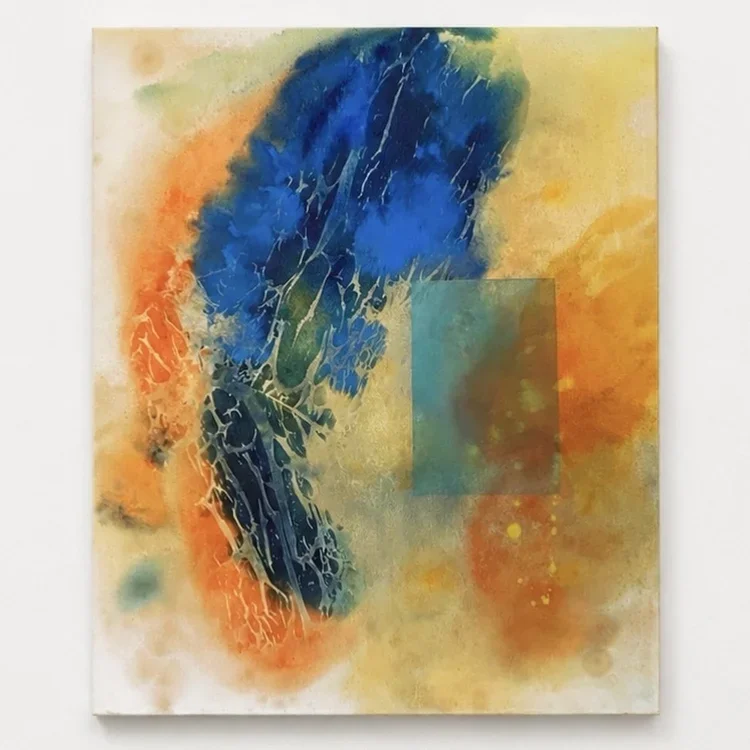
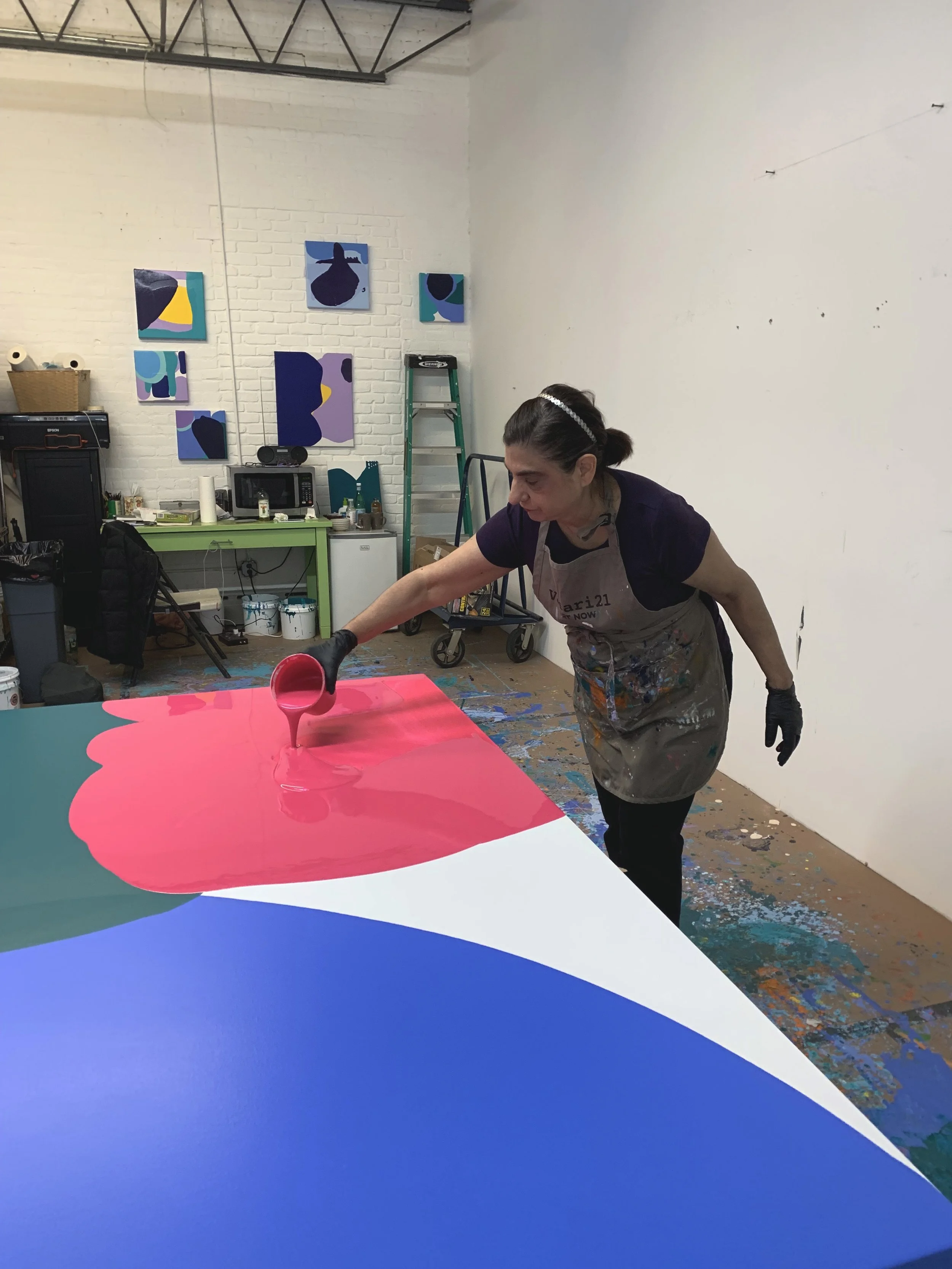
For many years, poured paint generated the main event in my work. It spread, collided, and settled into forms that suggested currents, weather systems, cellular structures, and geological formations. In Surface Memory, the pour has become an opening condition. I interrupt and reshape what it produces through transfer, veiling, drawing, scraping, pressure, and selective removal. What matters to me now is how later decisions change what came before.
I think of each painting as a record of its own making. Marks may be buried, scraped back, transferred, veiled, or partially recovered. Earlier decisions remain present, even when they are difficult to see. The painting develops through revision, with different moments held together in the same surface.
My early training in printmaking continues to shape this process. I use pressure, reversal, repetition, and transfer without making conventional prints. I press glassine, tissue, waxed paper, and other materials into wet acrylic, then lift them away. These actions remove and transfer paint at the same time, leaving partial impressions, broken edges, and unexpected areas of loss. I work back into the surface with drawing, translucent color, abrasion, and additional layers.
Geometry gives the eye something to hold onto. Rectangles, arcs, lines, and partial structures may appear clearly, become buried, or return in altered form. They exist alongside atmospheric fields and marks that recall maps, weather, topography, or geological layers without describing a specific place.
The paintings are partially constructed and partially uncovered. I begin with an intention, but the materials redirect the work. I continue until the surface can hold fluidity and structure, accident and decision, concealment and recovery.
Each painting stands on its own, but when the works are seen together, colors, marks, and buried structures begin to echo across the group. They ask for slow looking. Their surfaces do not reveal everything at once, and what seems clear from a distance often changes when viewed up close.